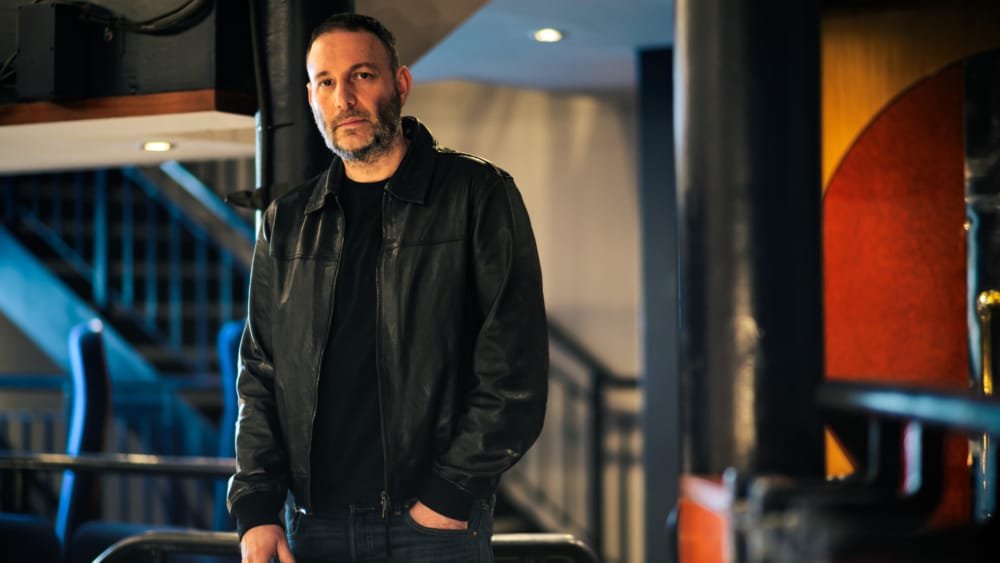
Leeds-based playwright, Philip Stokes on his tense postwar thriller ‘Shellshocked’
Recognised by the British Library as a culturally important playwright of the 21st Century, his plays have won a string of awards including the Fringe Review Outstanding Theatre Award and the Adelaide Critics Circle Award (twice).
Philip wrote and directed his first show in 2006, and since then his critically acclaimed plays have played to sell-out crowds worldwide, including in New York, London, Adelaide, Dublin, Chicago and Edinburgh. His works include Heroin(e) for Breakfast, Brighton 84 and Lash. His play Shellshocked, set in the wake of World War 2, is coming to Queen’s Mill, Castleford (Sept 11), and St John’s Parish Hall, in Staincross, Barnsley (Sept 16), as part of the Red Ladder Local programme. We caught up with Phil to talk about the play and his own story…
Tell us a little bit about Shellshocked. What is it about?
Shellshocked is a period thriller. It’s set after the Second World War and it’s about a young soldier, called Wesley Hepton. He returns from the war and goes for an interview with a local artist, Mr Lupine, to become his apprentice. But the events that unfold take a dark turn and the story explores the trauma of war, relationships and the desire to make great art. It’s an incredibly intense cat and mouse thriller across 70 minutes with unexpected twists. It’s about mental health and oppression but more than that, I hope it’s just rollickingly good entertainment.
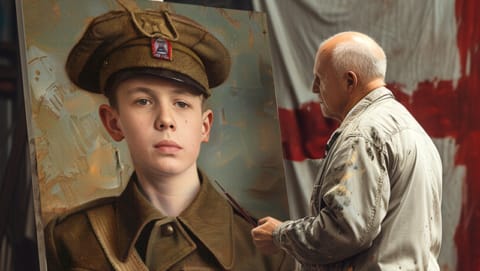
Shellshocked
How did the play come about and why did you want to tell this particular story?
I’ve had various successes over the years with lots of different plays, but I’d never written a period piece so I wanted to write a story and remove it from a contemporary setting but see if I could explore contemporary themes.
My grandfather fought in the Second World War and I was chatting to my father about his experiences and it became a kind of vehicle to tell this story. At its centre the question, ‘do you have to have experienced something in order to create certain forms of art, or can art be created solely through the imagination?’
This story is set at a time when respect for your elders still very much existed, and this allowed me to tap into this idea of a repressed individual. Soldiers would come back from war and were just thrown back into everyday life, having seen the most horrific things, and I think that’s still very contemporary when you look at soldiers returning home from war zones today. The ending is very violent, but it comes out of the manners of the time.
How did you get into writing?
I have always liked writing. I spent the 90s in an indie band called Jack Planet – we were the house band at the Duchess of York in Leeds and supported bands like Pulp and Shed Seven. But you can’t keep that lifestyle up forever. I got drawn to theatre, if I’m being honest, because I felt disappointed by a lot of theatre that I saw. It always felt very educational whereas I came from ostensibly a rock ‘n’ roll background. So there was this idea of can I generate the excitement on stage that you could get at a gig? My early work certainly had a kind of punk element of it, a DIY feel, and over the past 20 years I’ve had various degrees of success and found my own voice.
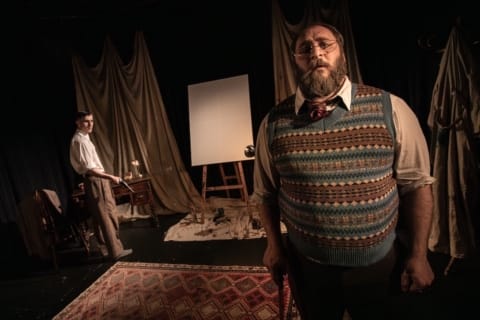
L-R Jack Stokes & Lee Bainbridge in Shellshocked credit Craig Lomas
Are there recurring themes within your work?
With a lot of my work there’s an element of interaction whereas Shellshocked is a fourth wall drama. It’s always about the audience for me. I’ve done shows which critically haven’t done so well, but people have said ‘that’s the best show I’ve seen at this festival.’ I want people to have conversations about it, whether they’re annoyed by it, amused by it, or baffled by it. I want some kind of visceral reaction. I love a good film noir where you don’t quite know what’s happening, but you’re engaged with what’s happening. It’s the same with theatre.
Did you watch much theatre growing up?
No, not at all. Music was more my thing. Even today, with theatre I still feel there’s an element of it trying to educate in some way and I think that’s a turn off to a lot of people, especially young people. I’ve always worked with younger casts in an attempt to draw them in. A lot of young people don’t go to the theatre and I understand why. I don’t think young adults would put going to the theatre in their top 5 things to do.
I think if I make shows for younger people and they do happen to go, then at least they might return, and that’s how I’ve developed my work. I do a lot of Fringe events, and I see people who came and watched my shows 20 years ago and now they bring their 20-year-old children with them.
Is theatre still important today and if so, why?
Theatre allows you to tell original, complex stories. It also allows you the time to do it. With Shellshocked, I came up with the idea in my house in Leeds, and then a year later, I’m watching it in Australia, and 18 months after that I’m watching it off Broadway in New York.
Theatre can be quite insular at times. That’s why I like to take my plays to different places. If you get a standing ovation thousands of miles away in South Australia, and you get one on the other side of the globe in New York, as an artist it’s an incredible buzz.
I love the fact that Shellshocked is on in these two local venues. If you didn’t catch it in Australia, don’t worry you can watch it in a Castleford mill, and that means a lot. Lee Bainbridge, who plays Mr Lupine, is from Castleford. He’s been doing it all around the world and now he’s back to where he started out. I love that.
Shellshocked will be at Queen’s Mill, Castleford on 11th Sept at 7pm and St. John’s Parish Hall, Staincross on 16th Sept at 7pm.
Philip’s latest play This Is Not America is on at the Pleasance Courtyard (Aug 5-31) as part of the 2026 Edinburgh Festival Fringe. THIS IS NOT AMERICA: A Razor-Edge New Play To Start Your Day! | Pleasance Theatre Trust