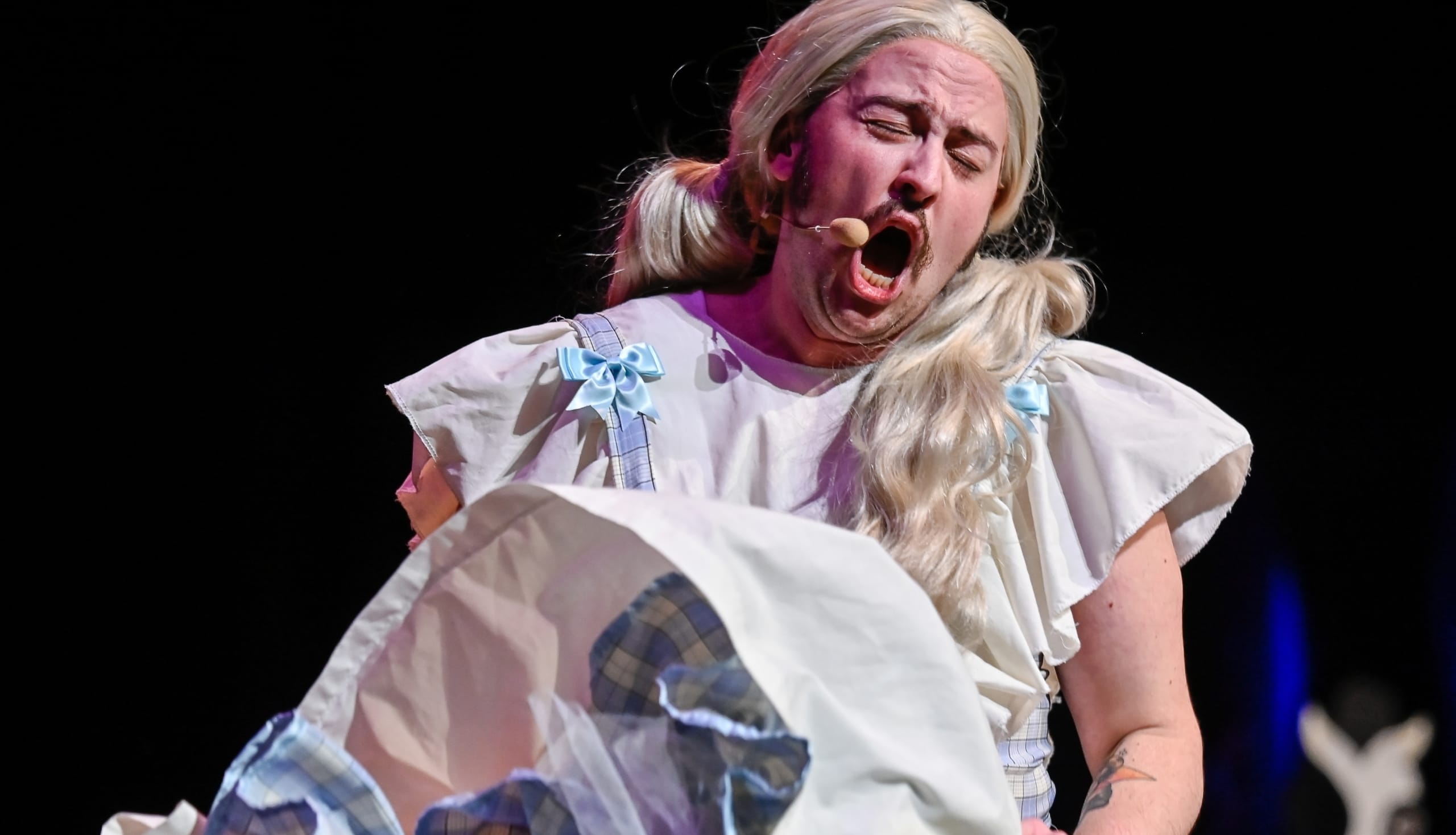
Meet trans trailblazer Hunter King
Hunter King is a neurodivergent theatre maker, producer and performer, as well as an internationally renowned drag king cabaret artist.
Hunter grew up in the Northwest of England and his debut musical, A Northern Tr*nny Hootenanny, is inspired by his real-life transition and the transformative power of drag. This foot-stomping, pun-slinging hoedown tells the tale of a milkmaid on a mission to discover their authentic self. Here, he talks about his story and his show, which included a sold out Red Ladder Local performance at Belle Isle Tenant Management Organisation (BITMO).
Tell us about Northern Tr*nny Hootenanny and what audiences can expect
The show is about my life and my gender transition and moving from a village to the big city, which for me was Manchester. It’s about how I met certain people, and how drag as an artform gave me confidence and helped me explore my gender identity and find out who I really am.
Northern Tr*nny Hootenanny itself is about a milkmaid from the wild, wild Northwest who always wanted to be a cowboy. She goes to the big city and meets an incredible drag king who basically teaches her drag, through which she manages to find her gender identity. It’s essentially a trans Disney parody.
So you can expect songs that you know and love, but in a way that you’ve never heard before. You can expect to laugh and cry along with many moments of trans hope and joy. It’s a message that I feel we need in the world today given the current political climate.
Why did you want to tell this story?
As corny as it sounds, I feel like the right stories can have such an impact on people, and it’s the only way that we can really bring about change. I’m an activist and someone who’s been very pro equal rights in any aspect of life. There’s so much going on now, especially about trans rights, which shouldn’t really be a debate. Trans people like me exist, so surely we have rights too. The UK is a first world country and yet in terms of trans rights we’re now 6th from bottom in the whole of Europe.
That’s why I wanted to get a story out there because I feel it’s the best way of getting through to people. There’s hardly anything in the media about trans masculinity. There have been all these laws introduced in the UK and Europe and trans men aren’t even in the conversation. That’s why I think it’s so important that people have access to media that offers trans hope and joy. So I brought this story to the stage hoping that people might understand all this a bit more. It’s why I always do a post-show discussion, so people can actually ask a trans person questions which they might never have done before.
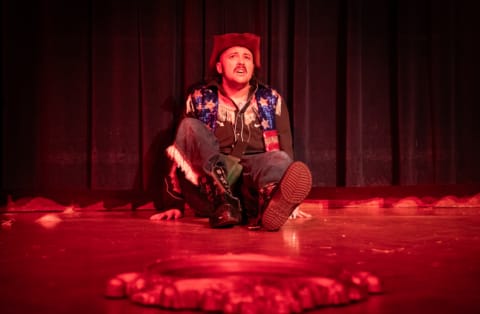
Credit Jason Lock
Why do you think it’s important to talk about trans issues to a wider audience?
We should want to educate ourselves and strive to have knowledge of all things that make up society. A lack of understanding breeds wariness that breeds fear, that then brings sentiment, which often turns into hate.
If we can show people that they can come and have a laugh with a trans person, it helps break down these perceptions and show that we’re not trying to break into your toilets. There are a lot of myths about trans people, and I think it’s important to have a safe space where people can come and listen and ask questions if they want to, because if there’s no representation there’s just going to be more misinformation.
“There are a lot of myths about trans people, and I think it’s important to have a safe space where people can come and listen and ask questions if they want to”
What made you want to be a performer?
I think there was always something in me that wanted to perform. My dream was musical theatre, but as someone working class from the north of England it just never felt accessible to me. Eventually, I studied digital media at Falmouth University down in Cornwall and then I came back to Manchester. I used to be a bedroom DJ and a few opportunities presented themselves to me around drag kings, which was something that I’d always been curious about. The first time I saw a drag king I thought ‘that’s what I want to do.’ In the gay village in Manchester I met a drag king called Valentino King, who sadly passed away three years ago. He taught me how to really be a performer which boosted my self-confidence.
It was my dream to do musical theatre but as a trans person you’re expected to fit this stereotype image – at least six foot tall, have a muscular physique and speak in RP – and I didn’t fit into that as a northern, working-class performer. But I was fortunate to get support from the LGBT community and then I was really lucky to get funded by Waterside in Sale, to produce my show. This then led to me being able to take it to the Edinburgh Fringe where it won an award and got some really good reviews. It’s been like a bit of a fever dream and I’ve been able to achieve all these things that people told me weren’t feasible.
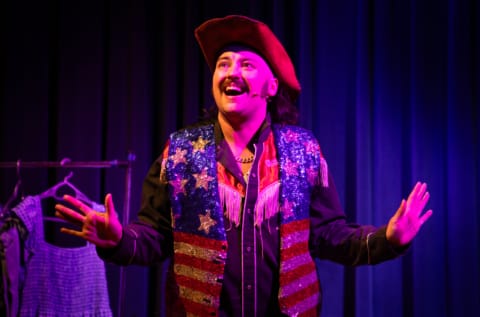
Credit Jason Lock
Why is it important that theatre reaches diverse audiences?
I think for a lot of people it feels like theatre has become inaccessible. That’s one of the things I love about Red Ladder is that it follows my kind ethos of trying to make shows that are accessible, because it’s not just important that trans stories like mine are told on the stage – it’s important they’re told in general. Especially now as we’re literally losing human rights. I just think it’s so important that there is accessible work.
Theatre has always been a platform for this. I’m a proper Shakespeare nerd and when you look at his work or if you go back further to ancient Greek and Roman times, theatres were built by people to entertain the masses, so they could keep up on politics and what was going on in the world.
The arts, and theatre in particular, are about storytelling and free speech and having the ability to make up your own mind about something.
“I’ve been able to achieve all these things that people told me weren’t feasible”
What do you hope audiences get from your show, if anything?
I hope they have a good time, and I hope if they had any preconceived notions about trans people, they leave thinking we are just the same, and that we’re all human beings.
A Northern Tr*nny Hootenanny! appeared on the Red Ladder Local circuit in November 2026.