My 20 years making theatre at Red Ladder by Chris Lloyd
Back in June 2006, England were among the favourites to win the World Cup and the Labour Party was in power on the back of a comfortable general election victory the previous year.
In the theatre world, the garden was looking rosy with London enjoying a record-breaking year after ticket sales topped £400 million for the first time in the West End’s history.
Fast forward 20 years and it might appear that little has changed. England are once again heading to a World Cup as one of the pre-tournament favourites as they seek to end 60 years of hurt, and Labour are in office with a thumping majority.
In reality, though, we live in a very different world. During the past 20 years we’ve been hit by a global financial crisis and endured a worldwide pandemic. We’re also witnessing an increasingly volatile political climate both at home and abroad and are living through arguably the greatest technological upheaval since the Industrial Revolution – thanks to the inexorable rise of AI.
Theatre, too, has undergone profound changes, and while the West End remains in rude health, attracting an endless stream of glittering shows and Hollywood superstars keen to flex their acting prowess on stage – elsewhere, it’s a different story.
Head out of the capital and theatre companies and venues face a perfect storm of challenges – from funding cuts to rising bills – that has seen the number of new plays being produced plummet and left touring theatre in “crisis”, as Arts Council England recently warned.
I became Executive Producer of Red Ladder in the spring of 2006 and being at the coal face I’ve seen these pressures unfold. But it’s not all doom and gloom. Far from it. Yes, I’m sure every theatre boss would like more money to put on more shows and invest in new talent, on and off the stage, but I do think it’s made writers, directors and producers work smarter.
Theatre has become far less self-indulgent and more collaborative, both at a national and grassroots level. It’s no longer viable to mount vanity projects and expect audiences to flock to see your show. Theatre-makers can’t take audiences for granted and nor should they.
Now this can, and does, lead to companies and venues playing it safe, relying on well-known shows, or plays, to get bums on seats. But thankfully it hasn’t prevented important and exciting new stories being told – you only have to look at some of the winners at the recent Olivier Awards to see that.
At Red Ladder I like to think we’re doing our bit to champion new talent. Our latest co-production, Close Enough to Touch, a collaboration with Hull-based Silent Uproar that goes on tour this autumn, is a new, one-person show by first time playwright Henry Roberts that revolves around sex, heartbreak…and toilets. Now that’s definitely not playing it safe!
For small-scale theatre organisations like us the choice of work is absolutely key. We’re funded to make one national touring production a year, so we have to get that right. This means asking ourselves two important questions – why are we making this, and who is it for? And if we want theatre to continue to thrive, then we need to be reaching new audiences.
As always, money (or lack of it) remains an ongoing issue, one that is exacerbated by inflationary pressures beyond our control. Local authority budgets continue to be cut, while charitable Trusts and Foundations are inundated with requests for support.
At Red Ladder, we’re incredibly fortunate to be part of the Arts Councils’ National Portfolio, but there have been times in the past 20 years when we haven’t, and that’s when you really find out what you’re made of.
What hasn’t changed is my belief in the ability of theatre to entertain, inspire and hold up a mirror to the world we inhabit.
I’ve worked in the theatre for the last 45 years – from front of house at the old Leeds Playhouse (when it was housed in a temporary building owned by Leeds University), where I worked alongside with Marc Almond of Soft Cell fame behind the bar, to running a small theatre overlooking the Irish Sea on the Cumbrian coast – and throughout that time I’ve been amazed at the skill, dedication and integrity of the artists and creatives I’ve had the good fortune to work with.
Looking back over the last 20 years, there is one production that stands out for me above all others – The Damned United. In 2014, just after Red Ladder had been cut from the Arts Council’s core client group and we were defiantly looking for ways to keep the company going, I had a pint in a pub in Ossett just outside Wakefield with my friend David Peace.
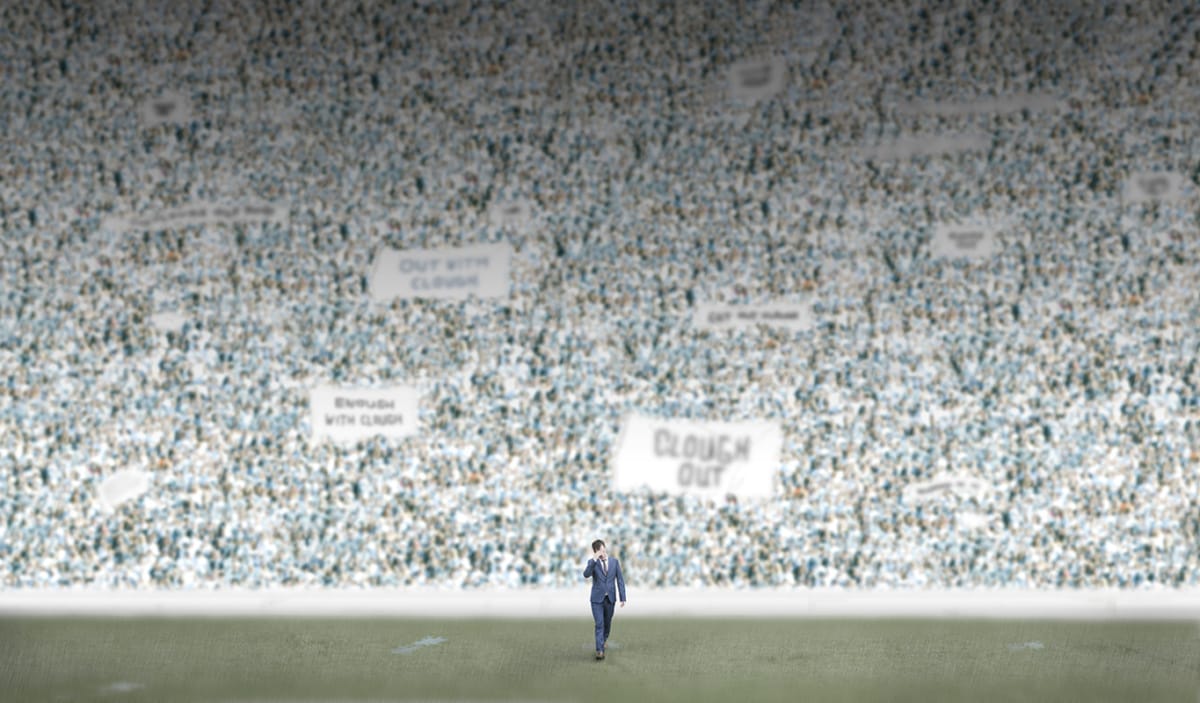
We were chewing the fat as both my beloved Leeds United and David’s team (Huddersfield Town), were losing on the first day of the new season. We were chatting about the plight of Red Ladder when David made a magnificent gesture to donate the rights to his epic novel of the same name to Red Ladder. The price? £3.68 + VAT – a penny for each page.
The next day, I sidled up to James Brining, who was artistic director of Leeds Playhouse at the time, and asked if they would be interested in co-producing with us. His answer was an emphatic ‘yes’.
And so we embarked on a journey that helped save the company through a sellout, five-week run at the Playhouse. We returned there with the show twice during a six-year touring period that included a highly successful run at Pleasence, in Edinburgh, as part of the Fringe, and two pre-Fringe performances at Hibernian Football Club – our very own stadium tour!
That show played everywhere from plush theatres and Rugby League grounds to local sports clubs and community centres, and captured the true, pioneering spirit of Red Ladder.
What gives me real hope looking forward, is that for all the slings and arrows fired at the theatre industry, the pipeline of talent is as strong as ever. I see it in the raft of brilliant and eclectic shows playing in venues big and small across the region – in places like Barnsley, Castlefield and Wakefield – and in the end of year student productions at Leeds City College, Leeds Conservatoire and CAPA College in Wakefield.
This tells me that the appetite for live performance remains undimmed, and that theatre in this country has a bright future – as long as all this wonderful talent is given the opportunity to shine.